Tuesday, November 16, 2004

Edgar Foster returns (with Kripke)!

Edgar Foster returns, after a long absence, to raise a new question. The question, it turns out, comes from his recent reading and researches in the philosophy of former Princeton Professor, Saul Kripke (pictured left):

Foster:
I hesitate to ask this question for fear of starting a new email thread. But what do you think about the proposition "If x is possibly distinct from y, then x is necessarily distinct from y"?
Blosser:
I would say: nonsense and bullwinckle. X could be possibly distinct from y without being necessarily so, could it not? Even if you want to eliminate altogether the element of seeming (to be) in possibility, this would seem to be so, in my humble opinion. For if x is possibly distinct from y, this has to mean that it is also possibly not distinct from y, which means that it can't possibly be necessarily distinct from y.
Foster:
My question is based on Kripke's discussion in the last portion of Naming and Necessity [Amazon link]. What you say above makes sense. However, there are two points I did not mention in my original missive. First, Kripke has identities in mind. Second, he posits the view above with rigid designators in mind as well. For example, "Hesperus (x) is Phosphorus (y)." This proposition asserts that x is y. In this case, we know that x is not possibly distinct from y since x is y. But what if someone says, "Mental states are brain states"? The proposition is again one pertaining to identity. Kripke would also say that "mental states" and "brain states" (in the example above) rigidly designate their respective referents such that these designations obtain in all possible worlds.

He would then undoubtedly ask whether mental states (x) are possibly distinct from brain states (y). Kripke would go on to reason that if mental states are possibly distinct from brain states, then they are necessarily distinct from brain states in the same way that Hesperus, if possibly distinct from Phospherus, would have to be necessarily distinct from Phospherus since an entity that is possibly distinct from another entity cannot be (evidently) identical with that entity. So it seems that possibly not being distinct does not enter into the picture when we're talking about the subject of identity and rigid designators.

On the other hand, [Notre Dame philosopher, Peter] Van Inwagen (pictured right) takes Descartes to task for making a similar argument with respect to the RES COGITANS and the RES EXTENSA. Essentially, the French philosopher is arguing that his soul is possibly distinct from his body. Ergo, the soul is necessarily distinct from the body since it is possible for the soul to exist without the body, also possible for one to be certain that he has a spiritual substance while being equally doubtful that he possesses a RES EXTENSA.

Ok, fire away!
Blosser:
I guess I have some questions about what Kripke means here (& perforce you) by the distinction between "possibly distinct" and "necessarily distinct,"as well as by "rigid designations." First, I wonder to what extent a person's epistemic ignorance might play into the category of "possibly distinct." That is, does the distinction depend, at least in some cases, on a person's not knowing that x is necessarily distinct from y and therefore hypothesizing that it may be "possibly distinct"? Secondly, I wonder what "rigid designations" means in this respect too. Could something be "rigidly designated" yet fail to be rigidly self-identical or to exactly fit the rigid designation ontologically? This would seem to make a difference also.

Kripke says "Hesperus (x) is Phosphorus (y)." Okay, for the sake of an argument let me accept that this identity is ontologically determined and absolute. It would then make no sense suggest that x could be "possibly distinct" from y, would it; or, perforce, "necessarily distinct." Granted.

But when Kripke states "Mental states are brain states," he says something less clear. For we aren't entirely certain how mental states and brain states are related, though we have some non-empirical (pistical, for your benefit) commitments to the relative independence of mental states from brain states, as even epiphenomenalists have.

At this point one could meaningfully ask, it seems to me, whether mental states are "possibly distinct" from brain states, based on our ignorance as to how the two are related. A strict materialist would collapse the former into the latter, but even then might grant the former an epiphenomenal independence or seeming independence from the latter. But then it would seem that one could meaningfully ask whether, in this case, x is not possibly distinct from y without being sure whether x is necessarily distinct from y.

All of which would boil down to the question: what can Kripke possibly mean by his language of "rigid designation" here? Of course, if it is true in all possible worlds that x is necessarily distinct from y, then the identity of x and y is absolute regardless of whether we successfully recognize this identity and choose to "rigidly designate" it for what it in fact is.

I'm still not at all clear how "possibly distinct" is supposed to entail "necessarily distinct," in Kripke's usage. I can conceive of how darkness (x) could be "possibly distinct" from an overcast sky (y), as would be the case, for example, on a clear night. But I don't see how that would make x "necessarily distinct" from y (in this case), since one could easily conceive of an overcast day also being dark.

Friday, November 12, 2004

An exchange on pro-choice logic (Part 7)

(Continued ...)

Colleague:
Yeah, there are thousands of people out there who tolerate everything except intolerance, who want their kids to be anything but republicans--and they are all now licking our wounds and asking each other, how, since we're obviously right about everything, could we have lost an election? NPR is such dark comedy these days--Neil Conan and others inviting in these upper-echelon evangelicals, asking them their opinions, challenging others to respond to the challenge--it's hilarious. Funny times. It's enough to get one interested in politics.
Blosser:
Well, the blind spot in many of these people who, as you say, "tolerate everything except intolerance," is that they are themselves extremely intolerant of those they disagree with, sometimes to a point bordering on fanaticism. Intolerance of some things may be a function of anyone's thinking he's right about anything; but what heightens the irony with the people you describe is that they're often found among the ranks of those touting the celebration of every kind of "diversity," as long as it doesn't have anything to do with the cold, wet blanket of Christianity.
Colleague:
You always forget that I'm not a philosopher--I just play one on TV. I don't use terms with a huge degree of accuracy sometimes, though I always try to, and so I don't know what I meant by "faith" in my last. But Augustine says in On Christian Doctrine that "the life of the speaker has greater force to make him persuasive than the grandeur of his eloquence, however great that may be" (IV.59). What I find that that I am moved and persuaded when people are willing to be open and truthful, not about their truths, which we all have and behind which we all hide, but about their emotions. I don't think most of us even have direct access to our emotions--I know I don't most of the time. And when I meet someone who does, I am often persuaded--not on the basis of shared assumptions, which I thought was meant by cogency.
Blosser:
Oh, I don't think for a moment that you merely a TV philosopher. You can't pull that one over on me. I know you're actually a philosopher traveling in the disguise of an English professor. But anyway, you do make a nice point from St. Augustine's On Christian Doctrine. And I do agree with the old saw that one ought to "practice what he preaches." As. St. Francis of Assisi once declared: "Preach at all times. Use words if necessary!" All children are sensitive from their tenderest years, of course, to any discrepancies between what their parents say and do. Which doesn't make me think for a moment that what one says is unimportant: it had just better be backed up by a consistent integrity of life.
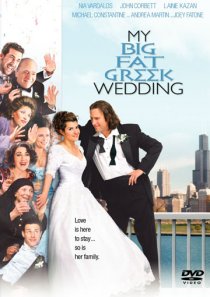
The issue of emotions, in my opinion, is a mixed bag. Therapists and women often point out that men aren't good at talking about their emotions, and I think this is especially true of "nordic"-type men from Scandanavian or Teutonic backgrounds, like the groom in "My Big Fat Greek Wedding" [Amazon.com DVD link]. I think it's probably less true of the Mediterranian and Latino types of men who wear their emotions on their shirt-sleeves. I think we nordic types of men often don't even know what emotions we're feeling. We have to sensitize ourselves to feel what we're feeling, oddly enough. On the other hand, I don't think of emotions as an alternative to truth. I don't think you were saying that they are, but only that an emotional connection between people is indispensable. Who wants to be "talked AT"? That shows no respect. Where I think some people may be led astray, though, is in thinking that emotions are somehow a substitute for truth. For example, if I find myself emotionally infatuated with a woman other than my wife, I might tell myself: "I've got to be honest with myself and with my feelings. I'm in love! I can't help myself!" But here I would be ignoring the fact that I had made (however tacitly) a decision to allow myself to indulge in feelings for someone in direct infidelity to my wife. Unless a human being is an animal unable to make and keep promises, this would be dishonest behavior. Furthermore, I would likely also have feelings of affection for my wife. So which feelings are the "true me"? That's something I have to decide on the basis of what kind of person I want to be: do I want to be a person who keeps his promises and makes love work, or a person at the mercy of whatever emotions and inclinations may come his way?
Colleague:
... As to Lacan, I'm certainly hoping the students will do more than cite him. I've never done this course this way before, so I don't know what they'll do. But one can distinguish metonymic from metaphoric thinking anywhere, whether it be in the thought process of a character, the relation between images in a work, the process of reading, or just in life. It's all very practical. Where it becomes complex and interesting is when Lacan associates metonymy with desire and metaphor with symptom. Since Silas had chosen to go to a gay bar and write about it, we talked last night about the limp wrist thing. Is that a symptom of homosexuality, in which case it would have a metaphoric relation, or something arbitrarily associated with it--in which case it is something one can play with? All the authors we have been studying seem to think that the metonymical way of thinking is simply better than the metaphorical--even Jakobson, who says that something is poetical because of the material relations between the signifiers in contiguity and sequence, not because the words mean things, refer to great truths, etc. Which I think is a little simplistic. But there are metonymies and metaphors everywhere, and they're fun to read.
Blosser:
So when our college administration issues a policy statement we might say "Linberger has spoken" and that would be a 'metonymy', and if their policy was particularly ill-though-through we might say "The administration's policy was lame" and that would be a 'metaphor', something like that? Why do the authors you've been studying seem to think the metonymical way of thinking and speaking is somehow better?
Colleague:
I share your skepticism about applications of relativity theory at the macro level, where things are obviously not relative at all. And also the Bloom quote--I think it's true that most students at least say that truth is relative. They say it because they have been taught it in high school, I imagine, and they were taught it to combat various forms of prejudice. But I don't think most of them really believe truth is relative--they are just surprised to find teachers, in college, who don't believe it.
Blosser:
I like your description of the phenomenon. I wonder, though, whether there isn't an inadvertent duplicity at work, not only among the students entering college but even among many professors, who often profess a relativistic outlook disdainful of any absolutes ("Whatever floats your boat," "Different strokes for different folks," etc.) while selectively adhering to absolute principles and values when it's convenient. For example, I can easily imagine a classroom of students professing their disbelief in any objective absolutes, yet inconsistently appealing to the absolute value of justice were I, their professor, to arbirarily flunk all of them. "That's not fair!" they would protest. But what is "fairness" if all values are subjective and personal and relative?
Colleague:
I've not read [Simone de] Beauvoir (pictured right), but I've heard of her argument that someone women are politically obliged to not be stay-at-home moms. Do you think my students' notion that that's what all feminists think comes from their having read Beauvoir or having spoken with people who have? I doubt it. Maybe very indirectly. I bet you that people who say this have never spoken with a feminist who holds that opinion. And I bet that very few people who identify as feminists do hold that opinion. The thing most feminists want, I think, is that there be laws prohibiting men from hitting or raping women and that these laws be enforceable. But I was talking with a young woman who volunteers at the rape crisis center and is somewhat of an activist--I called her a feminist, and she balked, as if that were some sort of insult. Very odd. We like our ghosts better--they walk around in our brains, doing the sort of things we expect them to, doo-doo-doo-toot doo, and everything's fine, and then you have a real experience in the world and the ghosts get mad.

Blosser:
Feminists come in different varieties. In one sense of the word I would call Pope John Paul II or myself a feminist, though you would smile at that. If the good of women is what is wanted, we would certainly want to champion that.

I've heard of such distinctions as these: 'equity feminists', who want equal wages for equal work; and 'gender feminists', like Mary Daly (pictured left), who want to eliminate males from the gene pool or eliminate gender difference altogether. The majority of women in the States, I agree with you, would certainly not want to take away the right of any woman to be a mother and wife and homemaker, if that was her choice. But that's not the view that animates the more radical feminists. Most radical feminists loathe and despise this choice and wouldn't hear of permitting it if they could have their way. They would derisively dismiss the feminism of a Christina Hoff Sommers or even the lesbian Camille Paglia (pictured right), who probably scares the hell out of them. But let them speak in their own fevered words:

  • "[A]s long as the family and the myth of the family and the myth of maternity and the maternal instinct are not destroyed, women will still be oppressed.... No woman should be authorized to stay at home and raise her children. Society should be totally different. Women should not have that choice, precisely because if there is such a choice, too many women will make that one. It is a way of forcing women in a certain direction." ~ Simone de Beauvoir, "Sex, Society, and the Female Dilemma," Saturday Review, June 14, 1975.

  • "A parasite sucking out the living strength of another organism...the [housewife's] labor does not even tend toward the creation of anything durable.... [W]oman's work within the home [is] not directly useful to society, produces nothing. [The housewife] is subordinate, secondary, parasitic. It is for their common welfare that the situation must be altered by prohibiting marriage as a 'career' for woman." ~ Simone de Beauvoir, The Second Sex, 1949.

  • "[Housewives] are mindless and thing-hungry...not people. [Housework] is peculiarly suited to the capacities of feeble-minded girls. [It] arrests their development at an infantile level, short of personal identity with an inevitably weak core of self.... [Housewives] are in as much danger as the millions who walked to their own death in the concentration camps. [The] conditions which destroyed the human identity of so many prisoners were not the torture and brutality, but conditions similar to those which destroy the identity of the American housewife." ~ Betty Friedan, The Feminine Mystique, 1963.

  • "[Housewives] are dependent creatures who are still children...parasites." ~ Gloria Steinem, "What It Would Be Like If Women Win," Time, August 31, 1970.

  • "Feminism was profoundly opposed to traditional conceptions of how families should be organized, [since] the very existence of full-time homemakers was incompatible with the women's movement.... [I]f even 10 percent of American women remain full-time homemakers, this will reinforce traditional views of what women ought to do and encourage other women to become full-time homemakers at least while their children are very young.... If women disproportionately take time off from their careers to have children, or if they work less hard than men at their careers while their children are young, this will put them at a competitive disadvantage vis-a-vis men, particularly men whose wives do all the homemaking and child care.... This means that no matter how any individual feminist might feel about child care and housework, the movement as a whole had reasons to discourage full-time homemaking." ~ Jane J. Mansbridge, Why We Lost the ERA, 1986.

Wednesday, November 10, 2004

An exchange on pro-choice logic (Part 6)

(Continued ...)

Colleague:
I still am very interested in this question of an argument's being persuasive, as opposed to the quite separate question of its validity. I didn't find you persuasive when you spoke of murder, nor when you spoke of equality, but I do when you speak of faith. I suppose I could analyze that, but another time, perhaps.
Blosser:
This is interesting. Since "faith" is usually divorced from rational content in the contemporary mind, this makes me wonder what "persuasive" means here. Of course I could be wrong in my assumption and, if so, I would wonder what (content) it is that you find persuasive. But in my current experience "faith" is usually associated by individuals with something like "sincerity" or "authenticity," which they seem to admire, but which has little if any identifiable rational content; and if that were the case I would wonder what "persuasive" means here. The only other possibility that comes to mind is that you didn't find my arguments "persuasive" because you disagreed with them, but then that doesn't reflect negatively on the soundness of the arguments but just only their cogency (or ability to persuade). Blaise Pascal (pictured left), of course, faced the same issue with traditional metaphysical arguments for God's existence, which he recognized to be impeccably sound but utterly ineffective, and therefore chose the approach of a "wager" that might appeal to the probability theories of his gambling buddies. Which makes me wonder what a similar strategy might look like in the abortion debate-- maybe an argument about how each of us is already up to our ears in gambling on the outcome of our choices, gambling that God won't be pissed off at the Last Judgment by our voting for a pro- abortion candidate, or whatever. Perhaps I'll have to think about that line of reasoning.
Colleague:
The spectre of the anti-essentialist raises its savage head, finally. That's a term I have heard but am not real familiar with--it sounds like what one would get if one tried to go about reducing Lacan to something simple and practical and catch and generally applicable. The word must go back to the days before I started paying attention (or have come about since I stopped paying attention--that's possible, too.)
Blosser:
The Greek term PHYSIS has a long history, just like OUSIA, and there have been those around, like the sophists, who refused to grant the existence of anything stable resembling 'natures' or 'essences' for a long time. So anti-essentialism is hardly anything new, though in its more recent forms (such as anti-foundationalism) it has a fairly short history from the late sixties in the Anglo-American philosophical academy, I suppose. I did find it interesting in the class you let me sit in on at the Taste Full Bean that you encouraged the class in your closing remarks to consider how Jacques Lacan (pictured left) might be applied or whether his thinking could be implimented in any practical ways. I'm still not quite sure what you may have had in mind by that invitation. I know several writers, like Julia Kristeva, who QUOTE Lacan in their work; but I can't help thinking you might mean something more than that.
Colleague:
The gender thing, though, has to do with a person who was just a strong, athletic man until she had to submit to a chromosome test, which revealed an x chromosome. The claim was not that she has no essence but that it was scientifically impossible, or only unscientifically possible, to determine whether she is male or female. I suppose you could say that Lacan is an antiessentialist, since he, like Judith Butler and just about everyone else, wants not to think of one having a self, which would be one's essence.
Blosser:
As I said in my remark about Buddhism, I find it interesting that Buddhism arrives at its ANATTA (or "non-self") doctrine by means of a kind of introspective phenomenological analysis of the empirical 'self,' which ends up dismantling any kind of Cartesian notion of an Ego Cogito. On a phenomenological level, I find this entirely compatible with the Christian notion that the self or soul is something unknowable in any self-subsistent way and can come to be known only indirectly or reflexively, as it were, as node or center of relationships with the world, with others, and with God. But I don't see how a moment that any of this leads to the conclusion that we have no self or soul. Why should we think that? The best discussion of this I've found is The Selfhood of the Human Person by the phenomenological personalist, John Crosby.
Colleague:
But Fausto-Sterling's point about gender had to do with the very real inapplicability of labels. (At least, she says it's real.) This was a sort of macro-application of the Heisenberg uncertainty principle--you cannot reveal the truth of her sex but only determine it by choosing your criteria arbitrarily.
Blosser:
I don't know much more about Heisenberg's uncertainty principle than the average non-physicist, I suppose. But I've always felt a bit uncertain (!) about the way in which such principles get applied outside the realm of physics by the laity. For example, I've seen Albert Einstein's Relativity Theory referenced in support of various spiecies (moral, metaphysical, epistemological, even religious) relativism, whereas I've always assumed that the whole theory hinged on the non-relativity of two ineluctable absolutes-- electromagnitism and gravity. But that's a mere detail.
Colleague:
But tell me more about this spectre, the anti-essentialist. There are so many such spectres--two women this week have told me that they're not feminists because they think it's alright for a woman to be a stay-at-home mom. Find a feminist who doesn't! I mean, a real, living, breathing one, not the gothic hairy-armed beast in a gothic, undergraduate mind. Relativist is another spectre--have you ever met one of those? Someone who really believes as an article of faith that it depends how you look at it? (Fausto-Sterling, in the example cited, might seem to be one, but as she shows, it only "depends how you look at it" if male and female are somehow the only two possibilities. The athlete in question, she argues, is an intersexual. And I'm sure she goes in doors and looks out windows, same as us essentialists.) Deconstructionist--postmodernist--skeptic--nihilist--these are Halloween costumes. I'm not saying that all labels are, but that we have our list of ghosts we walking around talking about as if we've actually seen. Republican--that's different. I met one of those once.
Blosser:
Ha! I thought I began hearing the strains of Dance Macabre some time ago ... I know how you like monsters and spectres. But these are your readings, not mine. You ask me to tell you more about "this spectre, the anti-essentialist." I find it much more interesting to talk about the nature of things, with Husserl, who used to say "Zu den Sachen selbst!" Why shouldn't we find our point of orientation in what is, rather than in what isn't, or in what seems capable of identifying itself only parasitically, reactionary-like, by way of opposition to any ostensible definition of what is? Who's to say, furthermore, that the shoe doesn't fit the other foot as well, if postmodernist recoils in horror from the spectre of the thing he hitherto thought harmlessly inanimate: "Aaaaaaaaaaaaah! It's ALIVE!"

Find you a feminist who doesn't think it's alright for a woman to be a stay-at-home mom? Sartre's mistress, Simone de Bouvoir (pictured left), for starters; and I don't recall any hairy arms in the video of the interview with her in our library.

Have I ever met a relativist? Well the more interesting question here might be whether anyone has met an absolutist-- these days, anyway. And I would define "relativism" more narrowly than the belief that it "depends how you look at it," which is quite compatible with absolutism or objectivism, in my opinion. I would define "relativism" as any view that denies the existence of any objective absolute that is not relative to time, place, or opinion. But even those are a dime a dozen. Allan Bloom writes in the opening paragraph of his book, The Closing of the American Mind, the only philosophy book I know of to make the New York Times bestseller list, "There is one thing a professor can be absolutely certain of: almost every student entering the university believes, or says he believes, that truth is relative. If this belief is put to the test, one can count on the students' reaction: they will be uncomprehending. That anyone should regard the proposition as not self-evident astonishes them, as though he were calling into question 2 + 2 = 4. These are things you don't think about." He wrote that in 1987.

And a Republican. Yeah, I suspect so. I remember Amy and I talking with the kids of the former LR dean of students at Wildacres this past spring, now with kids of their own. They were telling us how they weren't the least concerned about how their kids grew up, what influences they received in their schools, what sexual orientation they chose to embrace, etc., etc., etc. -- the quintessential picture of liberal urbanity-- with only one proviso: "provided they didn't become Republicans"! That -- ha-ha! -- seems to be one predictable absolute among a given cross-section of the population! Which does raise the question again about double-standards, doesn't it-- like Rousseau's insistence that he couldn't be expected to be "clear and consistent at the same time." But at least that has a certain charm about it, I suppose.

An exchange on pro-choice logic (Part 5)

(Continued ...)

Colleague:
Your dog analogy is problematic, isn't it? Sure, calling a tail a leg doesn't make it a leg, but what DOES make it one? I was reading recently about an Olympic hurdler in the 60s who failed her gender test and was barred from competition. She was chromosomally male but genitally female. Susan Fausto-Sterling, a biologist at Brown and the author of the book I read about this in, says that science simply cannot sex you scientifically--it must decide what the criteria are (genitalia, chromosomes, whatever else might bear on the question), and it can apply the criteria scientifically, but the criteria themselves are arbitrary. So I don't know--should I just dismiss this as "postmodernism"? (The Olympic Committee, or whatever it's called, didn't do so--they reinstated her status and took back their decision, though of course long after her career was ruined and she'd been spit upon after she returned to her country in disgrace, etc.) Who says what's a leg and what's not? The leg-ologists, of course. [Abraham] Lincoln's dog metaphor only applies if we assume, as he seems to, that we all know exactly what a leg is, and are only talking about how to name this thing that we all of course understand because it's obvious. Which may be the case with legs, though I have my doubts, but it isn't the case, apparently when it comes to sex and gender, and it isn't the case with abortion either if you're a "pro-choice"-ist. You can pretend that a leg is a leg, a spade is a spade, a life is a life--or perhaps it's not pretending, perhaps a life simply is a life. But I think that someone who actually wanted to communicate with and persuade people of the opposite opinion would take on the question and not beg it, which was the thrust of my original response to the parody. It just seems to me that we're mostly content to divide ourselves into tribes and sing the jingle.
Blosser:
Here we go again. I'm not sure how profitable this line of discussion can be. Yet I think it's an important, so I'll try to say a bit more. First, calling a tail a leg or anything else doesn't "make" it anything, does it? Isn't a thing whatever it is whatever we call it? Now of course that's what the anti-essentialist questions: that natures exist at all. Yet I would not only contend that they do, but that anti-essentialists selectively acknowledge their existence. They are most always seen entering a building through its door, for instance, rather than trying to walk through the wall.

Second, your gender-bender example involves all sorts of unknown details, since I'm not acquainted with the (tragic) case. For example, I don't know whether the person was genitally "female" by virtue of a "sex change" or by some other act of God. But all of this is really beside the point in view of Aristotle's principle that fuzzy boundaries (which he recognized abundantly in nature) don't eradicate genus/species categories. In more recent times, scientists have trouble deciding whether to classify light as waves or particles, just like they have trouble deciding whether to classify a virus as organic or inorganic. But how does the existence of boundary difficulties in these kinds of examples compromise our otherwise very clear distinctions between particles and waves, or the organic and inorganic, or male and female, forsooth (now THERE'S a word!)?

Third, my students typically tend to assume that differences of opinion reduce to differences of perspective, which they think means these differences are beyond adjudication. But we all know some opinions that are simply stupid, just like this one. The most elementary lesson taught by Plato is that the sophist ends up hanging himself on his own "logic." Which brings us to the folly of the members of the Flat Earth Society: just assuming the world is flat won't flatten it, as Sir (now Saint) Thomas More pointed out to Thomas Cromwell and the Duke of Norfolk.

Fourth, there are limits to our ability to persuade one another, as you point out; and this may be as distressing to some as it is boring to others. Joe's ability to persuade Roger of anything rests in part on the willingness of Roger to accept certain premises in common with Joe, as well as upon the soundness and cogency of Joe's argument. There are limits to this, however, as discussed previously. The court of ultimate appeal, of course, is the reality of the world, which, as Max Scheler (pictured right) notes, offers "resistance": the wall that the anti-essentialist refuses to try and walk through. At that point he may want to accuse the essentialist of begging the question, but he (the anti-essentialist) demonstrates by his own behavior that he accepts the existence of natures or essences (such as the solidity of walls), whatever he may say. So one test of the viability of a view of things is very likely the ability of a person to consistently live out the view. And I just don't quite see how the anti-essentialist manages it without being selective or inconsistent. While I admit, as Aristotle did, that there are fuzzy boundaries to various genera, I think (like him) that distinguishing between men and women is generally a task not condiserably more difficult than distinguishing between a dog's tail and his leg. But then, I've been called "dogmatic," "fundamentalist," along with all sorts of other names (though I'm not sure how any of that's relevant).
Colleague:
So you say that "I don't think there's any real need for an argument on this point," which I assume is the point of what's a life and what isn't, and I feel like I must be either a dolt or some spiritually craven fiend for falsity (and maybe I am), but I disagree. I don't think I'm arguing for a straight pro-choice platform but just quietly insisting that the issue is complex. I think the question of "where and why killing human lives is justifiable" is less interesting and also less important here. I don't know why I think that, though--interesting question.
Blosser:
I assure you that I have no wish to offend you. Maybe I was a bit blunt. Maybe there are complications. I know an acquaintance of mine just had a son whom she refused to abort even though he is mentally retarded, has cerebral palsy and is blind (his brain was growing outside his skull in the womb and required surgery upon delivery to correct that problem). Life can be complicated and often tragic, though often it seems like it's amidst the tragedies that God seems to pour out His most abundant and miraculous graces. But I feel a little like the British member of parliament who quit his party the day it simultaneously adopted a platform affirming abortion-rights and the protection of Gold Fish. Albert Camus (pictured right) wrote:
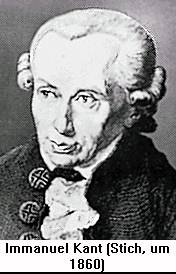
"The world expects of Christians that they will raise their voices so loudly and clearly and so formulate their protest that not even the simplest man can have the slightest doubt about what they are saying. Further, the world expects of Christians that they will eschew all fuzzy abstractions and plant themselves squarely in front of the bloody face of history. We stand in need of folk who have determined to speak directly and unmistakably and come what may, to stand by what they have said."
I view myself as an unworthy aspirant to that ideal-- an ideal, which, in my humble opinion, the Catholic Church has come very close to meeting, especially in the person of the Holy Father, Pope John Paul II. Not many people (Catholics included) may LIKE everything the Church stands for, but I doubt whether many have serious questions about what that stand is.

No organization comes close to having the network of social service programs for feeding the poor, sheltering the homeless, clothing the naked, assisting unwed mothers and battered wives, providing orphanages, etc.-- not even the United Nations. But amongst all these programs there is one thing that I've never heard called into doubt: the belief the life is sacred and that deliberate abortion is murder. If the Church is doing her job on this front, I'm not really too concerned if arguments fail to persuade, because I know when it comes right down to what's most important, people are far more apt to be persuaded by personal compassion than by an argument.
Colleague:
I don't know--it's an interesting question to me. Suppose you think that (in the context of this discussion, which I take to be a discussion of the moral and legal issues of the abortion question) that there is no substantive difference between a fetus and an abortionist, and I think there is. How do we proceed? We don't just look up the answer in the World Book Encyclopedia, do we? Categories are not absolute but creative, or so I've always thought. Do we determine the outcomes or results from the category assumptions and then backtrack, judging the assumptions accordingly? (I.e. you must be right, because your assumptions lead [let us say] to criminalizing of abortion, whereas mine [let us say] do not). But then we would have to know a priori that abortion should be criminalized, which is precisely what we want to find out. Do we manipulate categories creatively, just for the fun of it? Do we sit up all night, Quaker-style, praying and listening for an answer, and refusing to budge until consensus has been achieved? I can't think of a better way than that, but I'm not sure how philosophical it would be.
Blosser:
I don't have sufficient time here for this, but I wouldn't write off entirely the Quaker-style thing. At least, I agree with Pascal that spiritual and moral dispositions affect how we see the "data." Love opens our eyes to things that others (who don't love or who hate) are blind to. Etc. So I would want to say something about the importance of this factor in the background. The other thing might be to go take a look at the abortion scene and, if possible, to witness an abortion, or watch one on TV or something. Talking to women who have been through abortions is eye-opnening. The repression, sublimation, and scarring are beyond imagining. Then there's the carnage of the act itself, which is awful to behold. There's always a chance that none of this would affect one, but I would think it important to check it out. My own humble page on this issue can be found here. Then, in turn, I should probably be open to hearing and prayerfully reflection on the stories of some of the more outspoken opponents of the pro-life position. Something like that, maybe.
Colleague:
And the equity thing is interesting, too. You're right, of course, that we are in no sense equal in any meaningful sense, even if we're identical twins. Perhaps it does follow from this that equality as a political banner or slogan just makes no sense. It's a relatively new idea, of course. Medieval peasants didn't think they were "equal," I bet--nor did their owners. But two questions: isn't it the case that we simply cannot say this on today's cultural scene? You can be against abortion, but you cannot be against equity and equality: whatever your opinion on whatever you're opinion is on, the need for equity must warrant it. So you say, if there's such a thing as equity, then the fetus must have its share, etc. But you cannot say, men and women simply are different, and they have different gifts and different consequences, and must therefore orient themselves differently vis-à-vis (let us say) sexuality--even though all this us quite obviously true. I mean, we can say it, but Bush can't--no elected official can, and it seems to me the whole debate is conditioned by that universal need to self-censor.
Blosser:
You have never uttered a truer word. This self-censorship thing is simply amazing to me. I have caught the most unlikely people engaging in the most amazing acts of self-sensorthip in this way. The ungrammatical singular "they" is the most notorious linguistic example. Even Catholics tip-toe around the wording of Ephesians 5 by talking about "mutual submission" of husbands and wives to one another, though of course the text says no such thing.

Having said that, I think we would both acknowledge that there's a distinction to be made between the moral and the legal and the politically possible, and that the difficulty of supporting a position politically is insufficient excuse for supporting it morally, if it calls for support. It would have been so easy for the then Sir Thomas More just to sign the Act of Supremacy-- so easy ... but for that little thing called conscience.

Wednesday, November 03, 2004

Kant vs. Bush

A colleague of mine forwarded to me the following piece of skywrighting offering a Kantian reading of Bush by a Bruce Merrill:
Here is an election day quote from the close of the 18th century (1795), which applies (I contend), to the current president of the USA.

"Just as we view with deep disdain the attachment of savages to their lawless freedom-- preferring to scuffle without end rather than to place themselves under lawful restraints... consequently preferring a mad freedom to a lawful one-- and consider it barbarous, rude, and brutishly degrading of humanity, so also should we think that civilized peoples (each one united into a nation) would hasten as quickly as possible to escape so similar a state of abandonment. Instead, however, each nation sees its majesty... to consist in not being subject to any external legal constraint, and the glory of its ruler consists in being able, without endangering himself, to command many thousands to sacrifice themselves for a matter than does not concern them."
Thus Kant notes, in his essay on "Perpetual Peace" [Perpetual Peace, and Other Essays on Politics, History, and Morals (HPC Classics Series)], which, despite the rationale for a past social contract that everyone acknowledges, individual nations and rulers continue to behave in a barbaric & brutish manner.

Well, [Merrill writes] certainly our ruler "sees [his] majesty... to consist in not being subject to any external legal constraint." International law and UN sanctions are for other weaker nations. Certainly not for those born-again men who swagger out of Texas. And then, too fearful to "endanger himself" in 1972 in a war which he ostensibly supported, and hardly endangered now, he takes great satisfaction-- "bring it on!"-- in the power of sending those not as wealthy and entitled as he to the front lines, where they fight & die a war whose true rationale (the geo-political game-plan of the Bushites) remains essentially concealed, and "does not concern them."
To this, I offer the following brief rejoinder:

Kant's "Perpetual Peace" was written under the Enlightenment assumption that sin is a myth and that the scourge of war, like the aberrations of interpresonal conflicts, could ultimately be resolved through universal Reason. Hence, when planning his world-government, Kant had not the fears of England's Lord Acton, who said that power corrupts and absolute power corrupts absolutely. By contrast, I find at least some small comfort in the notion that our tradition of liberal democracy, whatever its many shortcomings, emerged from the widespread assumption that the checks and balances upon human government are necessary ("that government is best which governs least") because human nature is fallen. The Christian ideal without doubt is a theocracy with Christ as King. Short of that, we are left incapable of the best three forms of government described by Aristotle (monarchy, aristocracy, and polity), because our we cannot trust our own nature to govern for the wellbeing of the governed; and thus we must have recourse to the least opressive of the worst types of government described by Aristotle (democracy, oligarchy, and tyranny). Since tyranny is out of the question, we're left with democracy (government by the greed of the majority) or oligarchy (government by the greed of the rich). Of these two, the least objectionable is democracy, which has the virtue of slowing the inevitable progress of society towards tyranny by its colossal inefficiency.

Our country's reluctance to submit to the tribunal of international judgment could in fact be motivated by a primitive and barbaric desire for selfish autonomy. But it could just as readily be motivated, at least on the part of some, by distrust of any tribunal in which the highest recourse is the arbitrary law of the majority, subject to no further sanction of divine or natural law. I find it interesting that those most hesitant to trust the judgment of the United Nations and/or World Court tend to be individuals who believe in natural law, if not divine law, while those most trusting of these international bodies tend to be individuals who believe in nothing higher than the voted will of the majority, which makes me think of the French Revolution and Rousseau's lovely notion of the Volente General and of dissidents who must be "compelled to be free." Our country today may no longer have the virtues observed by Alexis de Tocqueville, but I like to think that the American people, including the local farmers and Joe Six Packs, are still possessed of a sufficient residue of that legacy in their common sense, that I can repose more trust in their collective judgment than in that of the power-mongers of world government. Of course, I could be sorely disappointed. We're all merely human, after all.

Tuesday, November 02, 2004

An exchange on pro-choice logic (Part 4)

(Continued ...)

Colleague:
You are exactly right about corporations taking advantage of the perceived need for equity and somehow managing to get two for the price of one, which sucks for everyone. I don't see how the earlier system of gender policing was preferable, however. What would be interesting to me would be an argument against equity as a value. But if we continue to value equity, legislating in favor of it is going to mean legislating for control over one's body. I think an argument against equity might be so new and surprising that it might get some attention, but people seem afraid to make that argument, preferring to just say abortion = murder.
Blosser:
Well, stating the obvious (we're killing human lives here) is no argument, but it's enough to keep most simple-minded people from me from thinking it's a good thing. I don't think there's any real need for an argument on this point. Where the argument is needed, rather, is where and why killing human lives if justifiable.

The equity thing is interesting. I've always thought so since reading Jose Ortega y Gasset's The Revolt of the Masses (pictured right). And I do see how it's socially related in some of the feminist discourse, but I don't see how it's logically related in any way that really makes sense (unless I'm missing something here). People often want to tie the issues together in terms of a woman's right to control her own body, but this seems to miss the simple point that the baby's body is not her body, even if it's hosted by her body, as well as the further point that equity would seem to demand granting that infant a right to the protection of his or her little body as much as the mother has to the protection of hers.

But the equity thing has also been subjected to a great deal of mistification, in my view. For, in what sense are people equal? We're not equally healthy, intelligent, wealthy, strong, education, wise, gendered, able to carry babies in our wombs, diligent, etc., etc. I might want to argue that we're all equally human, but that presupposes a common human nature, which those disposed to puke at any hint of Aristotelian "essentialism" would seem to want to deny. So where does that leave us? We might want to argue that people have the right to equal rights before the law? But what does this mean when natural law is denied so that all we're left with is positive law (arbitrary human laws), which can be horribly unjust, and when "rights" seem to have reduced to whatever anyone wants to do that they can get away with doing?

Personally, I'd want to argue that the only viable defense of any kind of equality of rights before the law would have to be tempered by the demands of justice and based on the good consonant with their nature as human beings. There's really nothing that complicated about this. Natural law says we learn what a thing is from what it does, and we should treat things according to their natures. We don't water our tomato plants with gasoline, and we don't put water into our fuel tank. We learn to treat things according to their nature. What is the nature of a human being? Aristotle walks us through this in his The Nicomachean Ethics (Oxford World's Classics). It's not that hard. At least, it wasn't until this case of collective amnesia suffered by the readership of the New York Times, or at least that part of it which shares the presuppositions of those who write that parish magazine of affluent and self-congratulatory liberal enlightenment.
Colleague:
I was not aware that an unborn child could both be killed and inherit property. That does seem contradictory, though I'm not sure how to resolve the contradiction. Very interesting. I guess in a sense the point is moot, since the child can only inherit the property if it is born and lives.
Blosser:
It's one of the many crass and hypocritical inconsistencies ensconced in our contemporary system of positivistic, analytic jurisprudence.
Colleague:
I try not to get emotional about whether staying at home is shit-work or some wonderful privilege. I suppose at issue is choice. I will be honest with you: I have never found the idea of a "wife," or at least the concatenation of images that term conjures up in my head, to be anything but repulsive. I have no objection to anyone being a "wife," if that means staying at home and playing with kids and baking cookies and beaming radiantly or snarling bitterly depending upon her mood, but I don't want one in my house, thank you. I feel about wives about the same way I feel about TVs--don't want one. A friend and lover, someone with whom to share life's adventure, that I can see, but not a wife, a soccer mom, or what have you. But that's just me personally. I feel about "wives" the way I feel about war--if someone had to go to war and kill and die, I'd rather that person be me than someone else, but it seems better if no one has to. But if people want to . . . But anyway, as I say, the issue is choice. Choice is political, so sexuality is political. I've threatened to tell you about my father, but some day I'll tell you about my mother, too, if you're not careful.
Blosser:
I thought you said you were going to try not to get emotional here! But this sounds downright pathological, if not Pavlovian! Good heavens. Just what did happen between you and your mother!? You're working with a model of "wife" here that is appalling. Your wife must find this amusing, to say the least. Of course you may not like the connotations involved in her "having" a "husband" and you're "having" a "wife." But unless something has escaped me, that's what you apparently are to one another, like it or not.

Abraham Lincoln used to ask, "If you call a tail a leg, how many legs does a dog have?" When people would answer, "Five," Lincoln would correct them: "No, the answer is four. Calling a tail a leg doesn't make it one." But then, that's just common sense. Lincoln didn't know anything about postmodern insights.
Colleague:
I'm sorry I missed your guest--I don't remember any notice of her visit.
Blosser:
She was good. Sorry you missed her.
Colleague:
. . . I don't know that I have an opinion about the politics of abortion. My head is full of leftist arguments, as I have said, but I enjoy having this discussion with you and am learning a lot.
Blosser:
I don't know that I follow you here. On the one hand, you seem fond of saying that you don't know how pro-choice people think because you've never read any, and that you don't know whether you have an opinion about the politics of abortion. On the other hand, you state here that your head is full of leftist arguments. But then it would seem to me that it should be perfectly clear to you what pro-choice arguments would be and that you would have a definite opinion about the politics of abortion. In fact, it would seem that this datum would rise to the level of public knowledge, unless someone's missed something here.

Friday, October 29, 2004

An exchange on pro-choice logic (Part 3)

(Continued ...)

Colleague:
I agree with most of what you say--maybe all of it.

First, what you say last. That the pill and abortion rights and everything were mainly to make sexual promiscuity convenient. I rather suspect that something deeper and more troubling is at stake. My sense, from having dabbled in feminism, is that what was really motivating people through those decades was a perceived need to establish equality among individuals. Equality, not promiscuity. I imagine the idea in most peoples' heads was that, if some promiscuity and promiscuity-related consequences, arise from the legislation of equality, then so be it. And also in peoples' minds was the fact that gender politics is not fair. The consequences of sex were different for men than for women, and that was both unfair and, thanks to the technology of contraception etc., unnecessary. Promiscuous men were tolerate/glorified, while promiscuous women were shunned, and that was only because of pregnancy--for no other reason. And thanks to technology, that reason was no longer reasonable.
Blosser:
I suspect you're right about the equality issue. Many feminists stumped for the lifiting of the traditional bans on contraceptives because they felt it would free them up from being homemakers so they could break into the work force. There's an irony there too. Prior to WWII and for some time afterwards, a man's work wages were called a "living wage" and were sufficient (as a single income) to cover the expenses a whole family. After the changes of the sixties (when the Democratic and Republican parties changed places on many issues) the equity feminist agenda of equal pay for equal work was realized, but at the cost of the rapid erosion of the actual buying power of an individual's wage. The capitalist employers were delighted, since they eventually could hire two workers for the price of one, but it eventually meant that a family could hardly survive on a single income, leaving single mothers strapped and on WIC and welfare. Another thing, though, is the utter disdain some feminists express for homemakers, like Simone de Bouvoir, who says somewhere that women must not be allowed the carte blanche choice to become mothers and homemakers, lest too many women make the choice-- and Naomi Wolf who calls domestic homemaking "shit work." I don't deny that some women have suffered abusive husbands unjustly. But the atmosphere such remarks creates, I think, is hideously demeaning to one of the most important vocations a woman may have.

But I also suspect it's more than equity: probably also fears of overpopulation (at least that was a reason often given back in the seventies after the Club of Rome report), and the desire for what they conceived to be better marriages without the anxiety of abstinence during the fertile periods of the wife's cycle if they wanted to space children or avoid pregnancy. So I agree that most people probably did not blatantly say: "Hey, contraception? Great idea! Now we can be utterly promiscuous and have sex whenever we want to, in or out of marriage, without any fear of pregnancy!" But I'm quite certain that was something people quickly surmised as an inevitable by-product of the contraceptive and abortive technologies.
Colleague:
Now, of course, that legislation may have increased promiscuity. I don't know--I don't know what the statistics are, and I don't know to what factors to attribute them. But I think the above line of reasoning is basically valid: Equal treatment is desirable in principle; thanks to technology, unequal treatment is no longer necessary; therefore equality should be legislated. You could of course say, equal for whom? It's not equal for the unborn. But as I said before, the assumption seems always to have been that the unborn, or whatever you want to call them, are not to be counted. So that assumption needs to be refuted, and I'm not sure there's a scientific way of refuting it. Saying life begins at conception, at birth, or anywhere in between is arbitrary--you just choose your political agenda and decide according to that because there is no alternative.
Blosser:
Well, there are all sorts of ways, actually. Here's a legal way: I think it's a lovely inconsistency that though we permit abortion, we still recognize an unborn child in law when it comes to property rights. An unborn child is able to inherit property, and for legal purposes has been considered a legal "person" for as long as I can remember. So it's a blantant inconsistency, not to mention hypocrisy, that we extend the legal protection of property inheritance to the unborn while not extending to them to legal protection of their lives. In fact, we offer more legal protection to various endangered species of animals today than we do to unborn human beings (but that's a detail). We also subject to legal prosecution anyone who, through reckless endangerment, injures or otherwise causes a mother to miscarry her unborn baby.

Then there's the phenomenology of language. You like language. Have you noticed that no woman contemplating an abortion ever calls her unborn child a "baby," but rather a "fetus," "tissue," or even a "blob"? On the other hand, a woman (like Amy) who had been trying to get pregnant, will call her unborn child, even in the first few weeks of pregnancy before there is anything remotely recognizable as a human being inside her, her "baby"?

How is there anything "arbitrary" about saying that "life begins at conception, at birth, or anywhere in between"? Medievals like St. Thomas Aquinas lived long before there was any split in political opinion about any of this business, and none of them had any trouble recognizing an unborn child as a living human being. Did your son Peter suddenly become a living human being at birth? C'mon, the Chinese traditionally say that a child is one year old at birth! There's nothing mysterious about this. A child, like Peter, at birth has no recognizable use of reason. We therefore don't hold him morally accountable for knowing right or wrong. But anyone who would take the life of an innocent young child like him we would rightly consider a monster and prosecute as a criminal. What qualifications does an innocent human life have to meet before we grant him the protection of law? For Hitler, of course, it was being of sound mind, the age of reason, and Aryan. For us it seems to be birth. But if you're only partially born, you're not safe. A child doesn't have to have attained the age of reason to be 'safe.' If you're too old to be useful, you may face a threat of euthanasia, at the other end, of course. All of THIS strikes me as quite arbitrary indeed. But nothing about the recognition of a human life as human from the first moment of conception until natural death strikes me as arbitrary in the least. We've accepted the killing of unborn children as a fact of life, like the ancient Canaanites, I'm afraid, and we just don't like thinking about the details. Is there any other way to view it? "Terminating a pregnancy"? What's that? What sophistical euphemisms! I'm reminded of the Nazis.
Colleague:
You say,
You ask whether any distinction should be made between the morality of killing an unborn baby and a born (and presumably adult) human being. I would say that the more fundamental distinction is between human beings who are "innocent" and those who threaten our lives.
But it seems to me this is just dodging the question. And anyway, how is one's innocence, a theological quality, more "fundamental" than one's having been born or not been born, a biological quality? They just seem different to me--I don't see how one can be called more "fundamental" than the other.
Blosser:
What question is dodged here? There is NOTHING theological about my reference to "innocence." That is precisely NOT what I'm referring to, for then I would insist that nobody is innocent (Rom. 3:23). Rather, I'm using the term in the sense that has been generally applied to the 3000 civilian individuals who lost their lives in the Twin Towers in NYC. Anyone recognizes the difference between combatants or terrorists, on the one hand, and innocent civilians on the other. An unborn infant is "innocent" in that sense: he doesn't generally threaten anyone so far as I can see.
Colleague:
You're right about traditional morality being basically upheld in the popular media, which are almost always tediously conservative, except when it comes to sex. I think lots of people have come to value the radical, the alternative, the progressive, or to think they do anyway, so the veneer of sexual deviance is brought in to mask a deeper vein of tedious conservatism, and also, of course, because sex sells, as everyone has always known.
Blosser:
I would agree, with the exception that I find nothing at all "tedious" about traditional morality. I consider it common sense sanity, and I don't see much to commend as "progressive" (as I think you will agree) in alcoholism, drug addiction, gluttony, etc. Consider it an analogue of what G.K. Chesterton says about theological orthodoxy: nothing, he says, is so "exhilarating." (But you'd have to read his book, Orthodoxy, to appreciate precisely what he meant.)
Colleague:
And I agree with you that there's a lot about our society that needs to be changed. But the pro-life argument will always be received as an argument for political regression, an argument that we should go back to the old days, when women dealt with the consequences of sex and men didn't have to, when women were subject to strict controls and policing that men were not because of the consequences partly for them but mostly for the family's social status, etc. Bottom line, people will say, is that people will have sex, and pregnancies will happen, and if one sex can escape the consequences, or choose creatively among the possible consequences, then the other should also be able to. You could say, well, if people were brought up properly, then unwanted pregnancies wouldn't happen, but "brought up properly" means guarding your daughters with a shotgun, teaching them that their bodies are eclairs that everyone is going to want to take bites out of and that this is their fault, etc. It's just not fair, people will say. And I don't know how to refute that argument.
Blosser:
You say that it was back in the old days when women had to deal with the consequences of pregnancy and men didn't. I think nothing is further from the truth. The statistics paint the opposite picture. Contraceptives and abortion have enabled men to be totally irresponsible in their treatment of women. Men by and large view women as sex objects today. The use women for their own pleasure, and, because they can avoid encumbering a woman with babies, they feel justified in abandoning them for other, more attractive prey. Since 1965 the statistics show that men have generally held off longer before marrying, which has often made them less responsible. Incidences of delinquency, drug use, and sexual promiscuity (often at women's expense) have risen exponentially. And despite the existence of contraception and abortion, single mothers with children (often abandoned by their father) are the single most predictable group among those at or below the poverty line. I don't see how women fare better today, except as they are often portrayed on TV. Which is why I tell my students: protect your freedom of thought, avoid brainwashing: get rid of your TV. The bottom line is that MEN have been the group singly most at fault for escaping the consequences of their irresponsibility with women.

If fairness is what you're after, here's something that Dr. Janet Smith (who was here last weekend as my guest and a guest of the college, and largely ignored) points out that might have a bearing:
"There's a wonderful book out by Dr. Ellen Grant called The Bitter Pill: How Safe is the "Perfect Contraceptive"?. She was very much in on distributing contraceptives in the 60's in London, but she saw woman after woman coming in with different pathologies that she found were pill-related high blood pressure, blood clots, cysts in the breast, all sorts of things. So, she said, 'I'm not going to prescribe these anymore.' She looked into this and she discovered, that when they were first testing for the pill, they were trying to find a male contraceptive and a female contraceptive pill. And in the first study group of males, they found that there was some slight shrinkage of the testicles of one male, so they stopped all testing of the male contraceptive pill. You might notice that there is no such thing in the first study group of females. Three females died and they just readjusted the dosage. Now, I don't know what that tells you, but it tells me that there's something sinister going on here. Women are still dying from the pill." (For the whole discussion, see "Contraception: Why Not")
For more information on the connection between hormonal contraceptives and the epidemic of breast and ovarian cancer, largely ignored at the encouragement of the pharmaceutical and Planned Parenthood lobbies, see: Links Between "The Pill" and Breast Cancer
For further titles by Dr. Janet Smith, see below (and order here):

An exchange on pro-choice logic (Part 2)

Continued ... (from here)

Colleague:
I think I understand your position better now, and I don't disagree with what I see as the logic of it. Assuming it is true that, as you posit, abortion is a question of convenience, and not about the question of what constitutes federally protected life, then of course someone who thinks convenience has a higher moral value than right is ridiculous and fair game for parodists. (Is that a word? Parodiers?)
Blosser:
I appreciate what you're saying. And, as for "parodists," Heidegger loved creating neologisms, if that's one, so I don't see why you can't.
Colleague:
My point was not to take a position on the abortion issue but to question the rhetorical effectivenes of the parody. I was assuming that a parody is more rhetorically effective if it has the power to noplus those not already inclined to agree with the author of the parody on the issue in question. And I maintain that the parody is puerile because it makes no attempt to persuade anyone. The reason is that I don't believe those who identify as "pro-choice" of course do not believe that the abortion issue can be reduced to taking a position, for or against, on sexual freedom. I don't think they would share either your assumptions, as laid out in your most recent post (below), or those of the parodist.
Blosser:
The effectiveness of an argument (or parody) is, of course, very subjective. An argument may be perfectly valid and totally ineffective, such as "Either God exists, or Blosser is a ham sandwich; Blosser is not a ham sandwich, therefore God exists." Or it may be logically fallacious but perversely effective, as in the ad hominem genetic fallacy: "A belief based on a psychological need is untenable; theists believe in God because they have a psychological need for a heavenly father figure to give them security, therefore belief in God is untenable." But of course, even if that was why theists believed in God, this fact wouldn't have anything to do with whether God in facts exists. And an ad hominem genetic fallacy can be turned against the user: "Atheists disbelieve in God because they have a psychological need to believe they are not accountable to a higher authority, or else they might feel burdened with guilt," etc.

The parody in question, however, doesn't require adherence to any of the afore-discussed assumptions for against sexual freedom. It simply focuses on the "exception logic" of "I'm personally against abortion because of religious reasons, but wouldn't want to impose my views on others, so I'm willing to permit abortion as a matter of public policy." That's what it parodies, by saying: "I'm personally opposed to killing abortionists for religious reasons, but wouldn't want to impose my views on others, so I'm willing to permit killing abortionists as a matter of public policy."

So the question is: Is that effective? I think it does a pretty good job of exposing the insufficiency of such sloppy reasoning as a justification for allowing a public policy of killing anyone. Now whether it's effective in the sense of getting people to change their minds about abortion is another matter. I doubt it has much immediate success of doing that. It's more likely to provoke anger. In fact, one of my Catholic brethren told me, after hearing that I emailed that parody to some of my colleagues, that I must have the apostolate of "POP4Christ" (or, pissing off people for Christ). Is there any virtue in that, apart from the questions of my personal motives for doing this (which may or may not be charitable or puerile)? Well, short of taking up arms in defense of the unborn, since I'm not of the mind of John Brown who did so against the blight of slavery, I suppose I believe that provoking some anger among pro-abortionists may be one appropriate way of getting them to re-consider the idiocy of their "exception logic." Even if it got a few of them to abandon that "logic," I suppose that would be a coup.

However, I do agree with you that "effectiveness" is not a cut-and-dried matter. Logicians thus distinguish between validity, soundness, and cogency. An argument is sound if it is valid and also has true premises. But it is cogent only if it is sound and if the person to whom it is directed recognizes it to be sound. Which means, of course, that logical argument is unavoidably person-relative. Aristotle abandoned the attempt to argue with classical Skeptics, who refused to commit to any premises, seeing that they would undermine themselves by asserting the self-referentially contradictory proposition that "Nothing can be known."
Colleague:
Now I could be wrong. At issue, as I see it, is the question of what "pro-choice" people believe. If they do believe that their own convenience and their own sexual itch-scratching take prescendence and priority over moral law, then I stand corrected. But I don't think you'd find that most people who have had abortions or who support others' right to have them would think of things in those terms, and so arguments based on those assumptions will fail to persuade. A philosopher might want to say, well, even if people don't think they are making those assumptions, they really are, so therefore I am right in asserting (with some violence, which we have discussed before) that they are and in proceeding accordingly. Which may satisfy the philosopher, perhaps many philosophers. More interesting to me, though, and more rhetorically effective, would be a parody (or any other textual intervention) that addreses those it is designed to address in their own terms. I have suggested that texts that don't do that have the effect of most of the 527-type ads on the radio and television. They first of all persuade no one, second of all make no attempt to persuade anyone and could never persuade anyone not eager to be persuaded, third of all just participate in the tribal dumbing-down of society in general, and fourth of all polute intellectual air. It's an important and difficult point, I think. No number n of reasons (I like to put the n in there--it makes me sound so scientific) of reasons why I should move to the moon will pursuade me to do so unless they are accompanied by the necessary number of refutations of the reasons I have for not moving there. And people who make no effort to refute my own reasoning, as it actually is and not as they like to think it is, are not interested in teaching me but only in patting themselves on the back.
Blosser:
The above I take as a helpful gloss upon the topic of effective persuasion, and I accept it. I certainly believe you are right. If the opposition in any argument is to be effectively engaged, it has to strike home, like a good advertisement would. Most political ads are, as you suggest, abominably poor, a waste of money, and pollution of air time (which makes me happy we don't have a TV). The most effective political ad I've seen, a mailing, was a large thing that looked at first like an ad for a new Mexican restaurant. On closer inspection it was a political ad directed against Erskine Bowles, which pictured a Mexican, in sombrero and full get-up, THANKING Bowles for all the jobs he had sent to Mexico. That was actually funny, and perforce, somewhat effective.

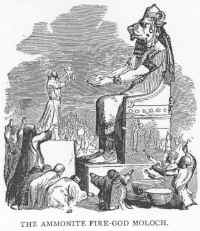
As to abortion, you say that you don't think that those who procure abortions support others' right to have them because of convenience or sexual promiscuity. Maybe not. Usually, I'm convinced, they recognize that individuals find themselves in very difficult and often embarrassing circumstances with an unexpected and unwanted "pregnancy" (unborn child on the way to being born). I recognize that. And I'm hesitant to judge too harshly any individual involved, because the society as a whole has come to accept abortion in much the same way that Canaan came to accept the practice of child sacrifice to Moloch (pictured left).

But the historical data quite frankly disturb me. Whatever the evils of the 1950s, and there were many, they are a far cry from what we face today, as you'll agree. The Donna Reed Show, I Love Lucy, Father Knows Best, and The Spin and Marty Show may have been colossally banal, but they reflect a very different world from that of the Jerry Springer Show (which I saw for the first time two years ago), and whatever else they have on TV today. Some statistics: one-third of all American pregnancies are aborted today. One-third of a children are born to single mothers. Over one-half of marriages end in divorce. Three-quarters of all African-American children are raised without fathers. 60% of poverty in the USA is accounded for by single women with children. The statistics on child-abuse, wife-abuse, and general abuse of women are off the charts. Pornography is a multi-billion dollar industry. The statistics on sexual promiscuity among teens is nearly matched by those on adultery among married couples. Furthermore, all of this-- in terms of exponential skyrocketing statistics-- has happened since Griswold v. Connecticut (1965) struck down all civil laws against contraception and Roe v. Wade (1972) struck down the laws against abortion for any reason up to the third trimester (and Clinton allowed partial-birth abortion [pictured right]-- the killing of a partially born baby-- a.k.a. legalized infanticide). The pill was promoted as a means of improving marriages by taking the anxiety out of sex, reducing unwanted pregnancies, eliminating child abuse ("every child a wanted child"), improving the lot of women in life, etc. And abortion was supposed to serve as back-up contraception where the pill or condom (or whatever) failed. What the data suggests, however, is the opposite: contraception made promiscuous sex much easier, hence, divorce is skyrocketing, along with children born outside of marriage, child abuse, single mothers below the poverty line; and despite the "blessing" of back-up abortion (at 4000/day), the trend continues unabated, contributing also to teenage delinquency, drug use, violence, etc., etc., etc.

Of course, in principle, it's really very easy to avoid pregnancy if you just don't have sex. The majority of kids used to wait to have sex until marriage, though that may be hard for anyone born since the fifties to remember. Equally uncommon was divorce: I remember my mother, when I was a kid, once whispering to me in a restaurant that someone at another table had been divorced, as if it were something utterly unheard of. But of course, the whole society has changed, which is why we can no longer easily expect teens to abstain from sex and couples to remain faithful in marriage. Which is why, as I said earlier, I find it hard to fault individuals.

But I do find it ironic that women now take "pills," not because they're not sick, but to avoid pregnancy; and that when a couple get's pregnant, they often call it a "mistake." The whole thing seems turned on its head: when a couple performs the procreative act and get pregnant, it actually means that something has gone right. God gave us pleasure in doing things that are good for us: eating, sleeping, procreating. But that which, in Aristotelians categories, was once regarded as "accidental" (the pleasure) has not become the "essence" of sex, so that when that which was once regarded as the essential purpose of sex (pregnancy) results, it is called an "accident." Ironic, to say the least.

Also ironic, I think is just how popular traditional morality is among Americans as long as it doesn't have to do with sex. Sitcoms and soap operas and movies never glorify murder or rape or stealing or even lying. But in one way or another they do seem to glorify fornication, adultery, sodomy, abortion, and contraception. They tell you to control your drug addictions, your alcohol addictions, your violence addictions, your gun addictions, and even your smoking addictions-- everything except your sex addictions. Isn't this inconsistent? Isn't this a problem? Isn't this related in some way to the holocaust of abortion on our hands?
Colleague:
But as I say, I lack the fundamental information here because I don't know how "pro-choice" people actually think. I'm sure studies have been done on that--I just haven't read any of them. My own question you have not answered--not that you should, but I still wonder about it. Should one or should one not distinguish between the morality of killing one who is attached to and is resident with a human host and killing one who is not. It's easy to just say yes, or no, or whatever, but what I would hope for in someone who wanted to change my views is someone who could try answer that question to my satisfaction. (I haven't decided in advance what the answer is.) And I don't even know what such an answer would look like or how the argument would proceed, so I'm kind of at a loss myself.
Blosser:
I doubt you need to search some obscure sources to find how "pro-choice" people actually think. Just listen to John Kerry, or any representative of the National Organization for Women being interviewed on NPR, or, for that matter, just turn on your TV and listen to how people talk about it on sitcoms or soaps, or even how your students talk about it. Among the highest perceptage of the clientelle of The Pregnancy Care Center in Hickory come from Lenoir-Rhyne College. Ask Gail Bowman, the director. I know kids who have had abortions at LR, and those form whom they have borrowed the blood money to pay for them. "How 'pro-choice' people actually think" is not some dark, occult secret. It's how half the population of the country thinks, and most of the media outlets think.

You ask whether any distinction should be made between the morality of killing an unborn baby and a born (and presumably adult) human being. I would say that the more fundamental distinction is between human beings who are "innocent" and those who threaten our lives. I can conceive of the justifiability of killing an unborn baby who, through no fault of his own, threatens his mother's life as a result of an ectopic (tubal) pregnancy. These, of course, are highly uncommon. Likewise, I can conceive of the justifiability of a police SWAT team taking out a killer on a rampage, or a military intervening, as in the Gulf War, to rescue a country under attack by tyrannical foreign invader, which requires subduing (and in many cases killing) enemy forces. In such rescue operations, some innocent civilians almost always lose their lives, but presumably the rescuing force never intends this, whereas it does intend to rescue the innocent civilians being oppressed and killed by the foreign invader. I don't find any basis for distinguishing between the morality of killing in terms of whether the human being killed is pre- or post- partem.

Thursday, October 28, 2004

Alasdair MacIntyre: "The Only Vote Worth Casting in November"

Notre Dame philosopher, Alasdair MacIntyre (pictured right) takes the "hands off" approach to the election in a fascinating analysis in the Archives of the Notre Dame Center for Ethics and Culture. In his essay, entitled "The Only Vote Worth Casting in November," He writes:
When offered a choice between two politically intolerable alternatives, it is important to choose neither. And when that choice is presented in rival arguments and debates that exclude from public consideration any other set of possibilities, it becomes a duty to withdraw from those arguments and debates, so as to resist the imposition of this false choice by those who have arrogated to themselves the power of framing the alternatives. These are propositions which in the abstract may seem to invite easy agreement. But, when they find application to the coming presidential election, they are likely to be rejected out of hand. For it has become an ingrained piece of received wisdom that voting is one mark of a good citizen, not voting a sign of irresponsibility. But the only vote worth casting in November is a vote that no one will be able to cast, a vote against a system that presents one with a choice between Bush's conservatism and Kerry's liberalism, those two partners in ideological debate, both of whom need the other as a target.

Why should we reject both? Not primarily because they give us wrong answers, but because they answer the wrong questions. What then are the right political questions? One of them is: What do we owe our children? And the answer is that we owe them the best chance that we can give them of protection and fostering from the moment of conception onwards. And we can only achieve that if we give them the best chance that we can both of a flourishing family life, in which the work of their parents is fairly and adequately rewarded, and of an education which will enable them to flourish. These two sentences, if fully spelled out, amount to a politics. It is a politics that requires us to be pro-life, not only in doing whatever is most effective in reducing the number of abortions, but also in providing healthcare for expectant mothers, in facilitating adoptions, in providing aid for single-parent families and for grandparents who have taken parental responsibility for their grandchildren. And it is a politics that requires us to make as a minimal economic demand the provision of meaningful work that provides a fair and adequate wage for every working parent, a wage sufficient to keep a family well above the poverty line.

The basic economic injustice of our society is that the costs of economic growth are generally borne by those least able to afford them and that the majority of the benefits of economic growth go to those who need them least. Compare the rise in wages of ordinary working people over the last thirty years to the rise in the incomes and wealth of the top twenty percent. Compare the value of minimum wage now to its value then and next compare the value of the remuneration of CEOs to its value then. What is needed to secure family life is a sufficient minimum income for every family and that can perhaps best be secured by some version of the negative income tax, proposed long ago by Milton Friedman, a tax that could be used to secure a large and just redistribution of income and so of property.

We note at this point that we have already broken with both parties and both candidates. Try to promote the pro-life case that we have described within the Democratic Party and you will at best go unheard and at worst be shouted down. Try to advance the case for economic justice as we have described it within the Republican Party and you will be laughed out of court. Above all, insist, as we are doing, that these two cases are inseparable, that each requires the other as its complement, and you will be met with blank incomprehension. For the recognition of this is precluded by the ideological assumptions in terms of which the political alternatives are framed. Yet at the same time neither party is wholeheartedly committed to the cause of which it is the ostensible defender. Republicans happily endorse pro-choice candidates, when it is to their advantage to do so. Democrats draw back from the demands of economic justice with alacrity, when it is to their advantage to do so. And in both cases rhetorical exaggeration disguises what is lacking in political commitment.

In this situation a vote cast is not only a vote for a particular candidate, it is also a vote case for a system that presents us only with unacceptable alternatives. The way to vote against the system is not to vote.
While I think MacIntyre offers some profoundly helpful considerations above, I also think that the practical exigencies of the current election are addressed more immediately by Catholic Answer's "Voter's Guide for Serious Catholics" published by Karl Keating (pictured right). The following is an excerpt:
YOUR ROLE AS A CATHOLIC VOTER

Catholics have a moral obligation to promote the common good through the exercise of their voting privileges (cf. CCC 2240). It is not just civil authorities who have responsibility for a country. "Service of the common good require[s] citizens to fulfill their roles in the life of the political community" (CCC 2239). This means citizens should participate in the political process at the ballot box.

But voting cannot be arbitrary. "A well-formed Christian conscience does not permit one to vote for a political program or an individual law that contradicts the fundamental contents of faith and morals" (CPL 4). A citizen’s vote most often means voting for a candidate who will be the one directly voting on laws or programs. But being one step removed from law-making doesn’t let citizens off the hook, since morality requires that we avoid doing evil to the greatest extent possible, even indirectly.

Some things always are wrong, and no one may deliberately vote in favor of them. Legislators, who have a direct vote, may not support these evils in legislation or programs. Citizens support these evils indirectly if they vote in favor of candidates who propose to advance them. Thus, to the greatest extent possible, Catholics must avoid voting for any candidate who intends to support programs or laws that are intrinsically evil. When all of the candidates endorse morally harmful policies, citizens must vote in a way that will limit the harm likely to be done.


THE FIVE NON-NEGOTIABLE ISSUES


These five current issues concern actions that are intrinsically evil and must never be promoted by the law. Intrinsically evil actions are those which fundamentally conflict with the moral law and can never be deliberately performed under any circumstances. It is a serious sin to deliberately endorse or promote any of these actions, and no candidate who really wants to advance the common good will support any action contrary to the non-negotiable principles involved in these issues.

1. Abortion

The Church teaches that, regarding a law permitting abortions, it is "never licit to obey it, or to take part in a propaganda campaign in favor of such a law, or to vote for it" (EV 73). Abortion is the intentional and direct killing of an innocent human being, and therefore it is a form of homicide.

The unborn child is always an innocent party, and no law may permit the taking of his life. Even when a child is conceived through rape or incest, the fault is not the child's, who should not suffer death for others' sins.

2. Euthanasia

Often disguised by the name "mercy killing," euthanasia also is a form of homicide. No person has a right to take his own life, and no one has the right to take the life of any innocent person.

In euthanasia, the ill or elderly are killed, by action or omission, out of a misplaced sense of compassion, but true compassion cannot include intentionally doing something intrinsically evil to another person (cf. EV 73).

3. Embryonic Stem Cell Research

Human embryos are human beings. "Respect for the dignity of the human being excludes all experimental manipulation or exploitation of the human embryo" (CRF 4b).

Recent scientific advances show that often medical treatments that researchers hope to develop from experimentation on embryonic stem cells can be developed by using adult stem cells instead. Adult stem cells can be obtained without doing harm to the adults from whom they come. Thus there is no valid medical argument in favor of using embryonic stem cells. And even if there were benefits to be had from such experiments, they would not justify destroying innocent embryonic humans.

4. Human Cloning

"Attempts . . . for obtaining a human being without any connection with sexuality through 'twin fission,' cloning, or parthenogenesis are to be considered contrary to the moral law, since they are in opposition to the dignity both of human procreation and of the conjugal union" (RHL I:6).

Human cloning also involves abortion because the "rejected" or "unsuccessful" embryonic clones are destroyed, yet each clone is a human being.

5. Homosexual "Marriage"

True marriage is the union of one man and one woman. Legal recognition of any other union as "marriage" undermines true marriage, and legal recognition of homosexual unions actually does homosexual persons a disfavor by encouraging them to persist in what is an objectively immoral arrangement.

"When legislation in favor of the recognition of homosexual unions is proposed for the first time in a legislative assembly, the Catholic lawmaker has a moral duty to express his opposition clearly and publicly and to vote against it. To vote in favor of a law so harmful to the common good is gravely immoral" (UHP 10).